A car gets an oil change. A furnace gets an annual service. The garage door, which has more moving parts than either and works in worse conditions, usually gets nothing until it stops.
A tune-up is our name for a single, comprehensive service visit. We carry them out for homeowners across Nashotah and the surrounding communities, mostly in the fall, and they are the best value of anything we offer.
What is included
We work to a fixed list so that every door receives the same attention.
Inspection
- Springs: condition, rust, gaps and correct sizing.
- Cables: fraying, corrosion and seating on the drums or pulleys.
- Drums, bearings and shaft: cracks, wear and secure set screws.
- Rollers: free rotation, wobble and wear.
- Hinges and brackets: cracks, bends and loose fixings.
- Track: alignment, damage and anchoring.
- Sections: dents, cracks, rust and bowing.
- Seals: bottom seal, retainer and perimeter weatherstripping.
- Opener: mounting, rail, drive, wiring, sensors and controls.
Adjustment and service
- 01
Tighten the hardware
Hinge screws, track bolts, bracket lags and opener mounts are all snugged. Vibration loosens them year after year.
- 02
Clean the tracks
Dirt and old grease are wiped out. Tracks are left clean and dry.
- 03
Lubricate moving parts
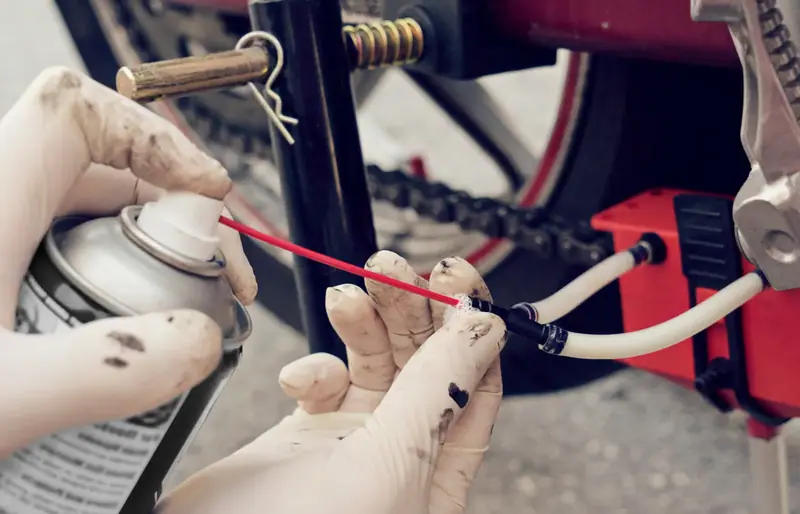
Spring coils, end and center bearings, hinge pivots, roller bearings and pulleys get a garage door lubricant that stays fluid in the cold.
- 04
Balance the door
With the opener released, the door is tested at several heights and the spring tension is adjusted until it holds.
- 05
Square the door
Cable tension and track spacing are corrected so the door sits level and seals evenly.
- 06
Service the opener
Chain or belt tension is set, the rail is lubricated where the maker specifies, and the trolley and arm are checked.
- 07
Set travel limits and force
The door should close snugly without the opener pushing it into the floor, and open fully without straining.
- 08
Test the safety systems
Photo-eye reversal, contact reversal on a flat board, and the manual release.
- 09
Check remotes and keypad
Operation and battery condition.
- 10
Report
We tell you what was done and what is wearing, with priorities.
What it does for you
A quieter door
Tight hardware and fresh lubricant remove most squeaks, rattles and groans.
A longer-lived opener
A balanced door asks very little of the motor. An unbalanced one wears it out.
Fewer breakdowns
Frayed cables, cracked hinges and failing rollers are found before they strand you.
Better sealing
A door that sits square closes against its weatherstripping properly.
Confirmed safety
You know the door will reverse if it meets a person, a pet or a car.
No surprises
You get advance notice of parts that are nearing the end of their life, and can plan for them.
What a tune-up is not
It is helpful to be clear about this. A tune-up is service and adjustment. It includes lubricant and minor hardware. It does not include replacement parts such as springs, cables, rollers or seals.
If we find a part that needs replacing, we will show it to you, explain why and give you a price. You decide whether to have it done then, later or not at all. There is no obligation, and we do not invent problems. Most doors that are serviced regularly need nothing more than the tune-up itself.
Before & after
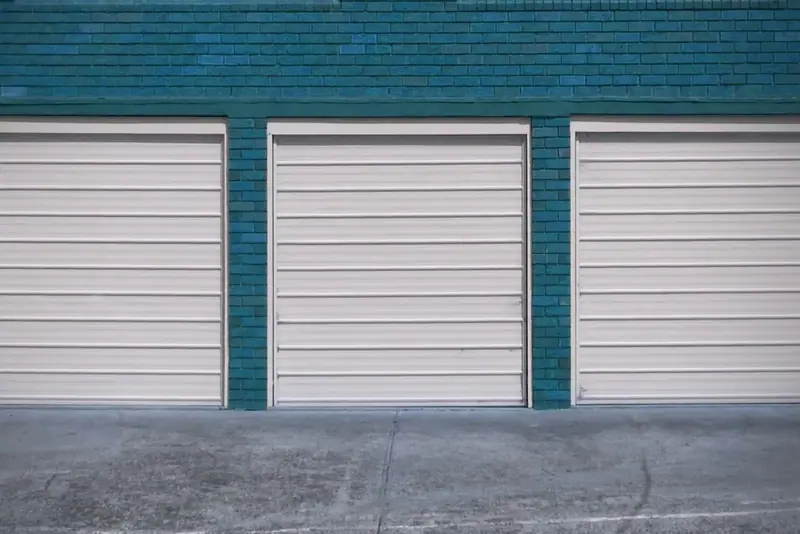
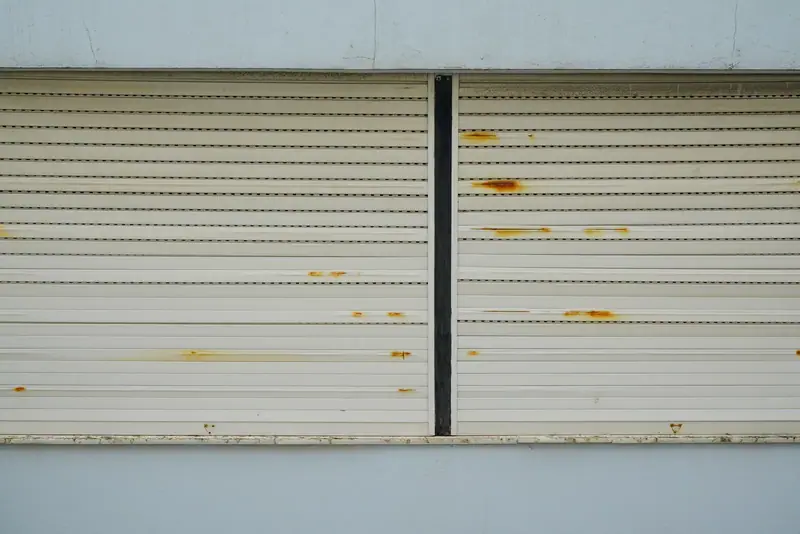
Grimy, rust-streaked doors compared with clean, aligned ones
Project notes
The doors in the first image show the outward signs of a door that has not been serviced: rust streaks from the fasteners, grime in the grooves and sections that no longer sit quite level. What you cannot see is usually worse, with dry bearings, loose hinges and springs that have lost their balance.
The comparison illustrates doors after proper care: clean faces, even gaps and level bottom edges. A tune-up produces the mechanical half of that picture. We tighten the hardware, lubricate every moving part, correct the spring balance, square the door in its opening and adjust the opener. A wash and a touch-up of the paint take care of the rest.
The owner gets a door that is noticeably quieter and smoother on the same day, plus an honest list of anything that will need attention in the coming year. That list is often the most valuable part.
Illustrative example. These are licensed reference photographs chosen to show the kind of change this service makes. They are not photos of a specific Nashotah Garage Door customer's property.
When to have it done
The best time: autumn
A door that goes into a Wisconsin winter balanced, lubricated with a low-temperature product and properly sealed will cope with the cold. One that goes in dry and out of adjustment will show it in January.
September through early November is ideal. It is also the easiest time to replace a bottom seal, while the rubber is still flexible.
A second visit in spring
After a winter of salt, grit and frost movement, a lighter check clears the grime, resets anything that shifted and catches corrosion early. It is worthwhile for doors that are heavily used, for garages near the lakes, and for detached or unheated buildings.
Other good moments
- After buying a home, when the door's history is unknown.
- After any impact or storm.
- When the door starts to sound or move differently.
- Before a long trip, if the garage is your main entry.
- When a new opener has been running for a year, to recheck settings.
How often is enough?
| Your situation | Suggested frequency |
|---|---|
| Attached garage, used a few times a day | Once a year, in the fall |
| Garage is the main entrance, used many times a day | Twice a year |
| Detached or lakeside garage, damp or unheated | Twice a year |
| Heavy wood or custom door | Twice a year, with a finish check |
| Seasonal property | When opening and when closing for the season |
| New door or opener | After the first year, then annually |
The balance test, explained
If we had to pick the single most important part of a tune-up, it would be this.
We pull the release so the opener is out of the picture. Then we lift the door by hand to about knee height and let go. Then waist height. Then shoulder height. At each point a correctly balanced door stays where it is.
- If it sinks, the springs have lost tension or are near the end of their life.
- If it rises, they are overwound.
- If it is heavy at the bottom and light at the top, or the reverse, the spring or drum is not the right match for the door.
Small errors are corrected by adjusting the springs a quarter turn at a time. Larger ones tell us the springs are due for replacement. Either way you find out now, not when the spring breaks. See torsion spring replacement.
Tune-ups and the Wisconsin climate
Everything about our weather makes a case for regular service.
Cold thickens lubricant. Ordinary grease turns stiff below zero, and the door drags. We use products rated for low temperatures and remove the old residue first.
Cold stiffens springs. A door that is marginally balanced in summer can be heavy in winter. We leave a sensible margin.
Salt corrodes the lower hardware. Bottom brackets, cables, lower hinges, rollers and the base of the tracks are sprayed with salt water for months. We inspect them closely and recommend rinsing them in spring.
Frost moves slabs. A floor that was level in the fall may not be in March. We check the bottom seal's contact and the door's alignment.
Humidity near the lakes. Damp air speeds rust on springs and cables. Lubricant doubles as a moisture barrier.
Heavy winter use. When it is cold, everyone uses the garage door instead of the front door. Cycle counts climb, and wear with them.
What you can do in between
A few minutes each season keeps the benefit going.
- Watch and listen to the door once a month. Note anything new.
- Wipe the photo-eye lenses and keep the floor between them clear.
- Put a drop of garage door lubricant on hinge pivots and steel roller bearings in mid-winter.
- Test the reversal with a flat board under the door each month.
- Rinse the bottom of the door and the lower tracks when the road salt season ends.
- Keep the threshold free of ice so the seal does not freeze down.
- Replace remote and keypad batteries before winter.
Leave springs, cables and bottom brackets to us. More guidance is on the residential maintenance page.
Why a professional tune-up beats a can of spray
Lubricating the hinges yourself is worthwhile, and we encourage it. A professional tune-up goes further in the ways that count.
Balancing the door means adjusting wound springs, which is not homeowner work. Judging the condition of a spring, a cable or a bearing takes a practiced eye. Setting the opener's travel and force, and then proving the reversal works, takes knowledge of the particular unit. And spotting the early signs of a problem, the first broken cable strand or the hairline crack in a hinge, is what prevents the breakdown.
It is also simply a second pair of eyes on a heavy machine that your family walks under every day.
Frequently asked questions
Usually forty-five minutes to an hour per door, a little longer if adjustments are extensive.
Once a year for most homes. Twice a year for doors that are used heavily, or that sit in damp or unheated garages.
It includes lubricant and minor hardware adjustments. Replacement parts such as springs, cables and rollers are quoted separately if they are needed.
Nearly always. If noise remains afterward, worn rollers or the opener are usually responsible, and we will point that out. See noise reduction.
Yes. Hardware loosens and springs settle during the first year. An early service keeps a new door working like one.
An inspection finds and reports problems and tests safety features. A tune-up includes that and adds the lubrication, tightening and adjustment. See safety inspection.