It happens to nearly everyone eventually. The car rolls forward an extra foot. A basketball, a bike or a ladder hits the door. A branch comes down in a storm. Or nothing dramatic happens at all, and one day you notice the top section has cracked where the opener arm attaches.
We repair and replace garage door panels for homeowners around Nashotah. The first question is always the same: can this section be saved or matched, or is the door past that point?
Panels, sections and how a door is put together
A sectional door is made of four or five horizontal sections stacked on top of one another. People often call them panels, though strictly a panel is one of the rectangles pressed into a section. We will use both words the way most people do.
Each section is a steel skin formed around stiles at the ends and center. Hinges join each section to the next and carry the rollers. On insulated doors, foam fills the space behind the skin, with a backing sheet or a second steel skin on the inside.
Three sections matter more than the others.
- The bottom section carries the lift cables at its corners, the bottom seal, and takes most of the knocks and all of the salt.
- The top section takes the push and pull of the opener, and has to resist bowing when the door is open and it is lying flat.
- Any section with windows is weaker along the glass line and needs to be handled accordingly.
Types of damage we see
Dents and dings
From balls, bikes, bumpers and hail. Shallow dents are cosmetic. Deep ones crease the steel and weaken the section.
Creases across the width
A fold line right across a section, usually from a vehicle. The section has lost its stiffness and will not recover.
Cracks at hinges or stiles
Fatigue from flexing, often where a hinge or the opener bracket is attached to thin steel.
Bowing
The top section sags in the middle when the door is open, or the whole door bellies inward.
Rust-through
Mostly along the bottom edge and lower corners where water and salt sit.
Delamination
The steel skin separates from the foam core, leaving a loose, wavy face.
Wood rot and splitting
On timber doors, soft bottom rails, open joints and split panels.
Repair, reinforce or replace the section?
| Situation | Likely answer |
|---|---|
| Small, shallow dents on an otherwise sound door | Leave, or improve cosmetically. Not a structural issue. |
| Top section cracked or bowing at the opener bracket | Add a reinforcement strut and an opener bracket plate. Often a lasting fix. |
| Section flexing but not creased | Fit a horizontal strut across the back. |
| One section creased or badly dented, door model still made | Replace that section with a matching one. |
| Two or more sections damaged | Compare the cost with a new door. Often close. |
| Model discontinued or color badly faded | A new section will not match. Replacement of the door is usually better. |
| Bottom section rusted through | Replace the bottom section if available, or the door if rust is widespread. |
About matching
To order a section we need the manufacturer, the model, the size, the color and the panel pattern. There is usually a label on the inside edge of a section or on the end stile. A photo of that label saves a lot of time.
Even with the right model, a new section on a ten-year-old door can look slightly different because the original finish has weathered. On white doors the difference is usually small. On darker colors and wood-grain finishes it can be noticeable. We will tell you what to expect before you order, and repainting the door afterward is an option on steel.
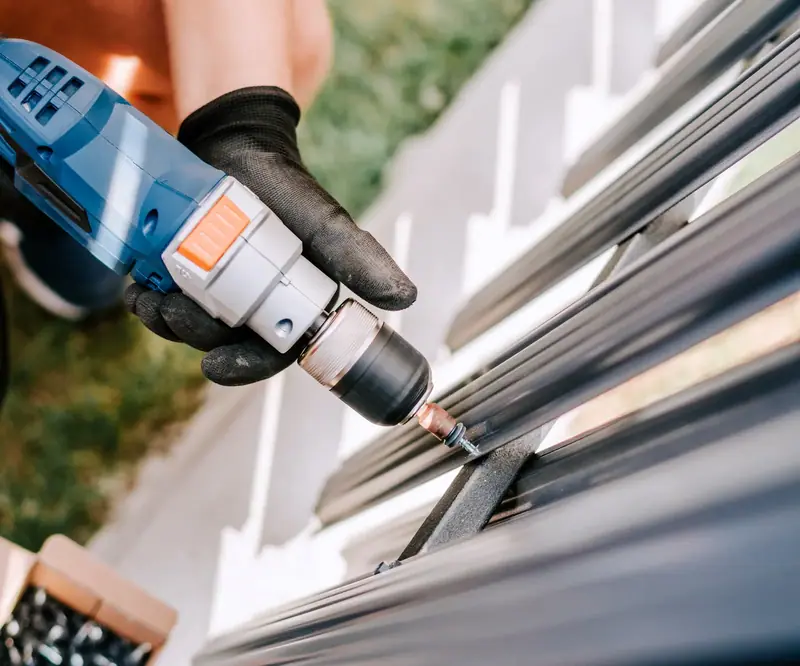
Struts: the inexpensive fix that saves many doors
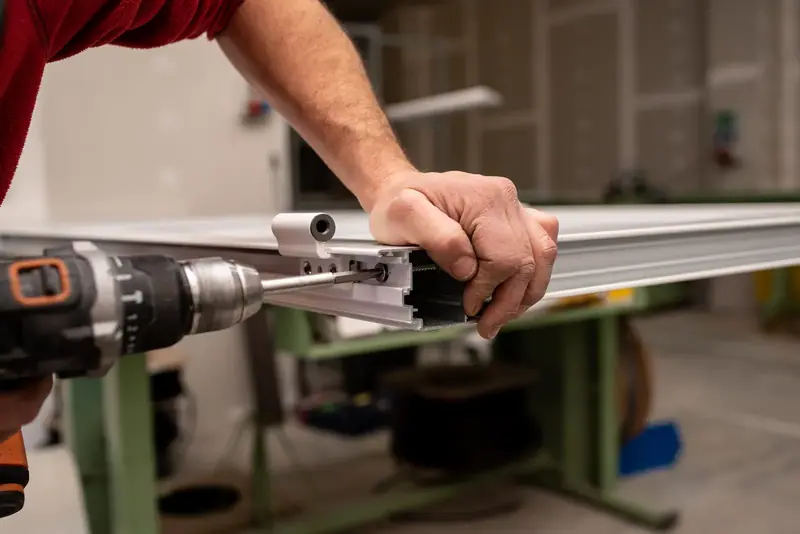
A strut is a formed steel bar that fastens across the full width of a section on the inside. It acts like the web of a beam and stiffens the section dramatically.
We fit struts when a top section is being pulled out of shape by the opener, when a wide door bows inward in wind, when a section has a minor bend that is letting it flex, and whenever an opener is added to a door that did not have one. On double doors, a strut on the top section should be considered standard, and many doors benefit from more than one.
A strut adds weight, so we check the door's balance afterward and adjust the springs if needed.
Before & after
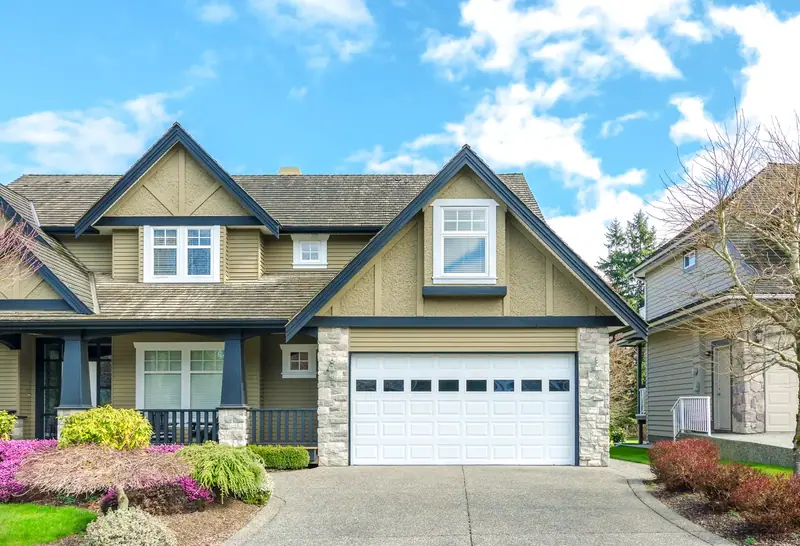
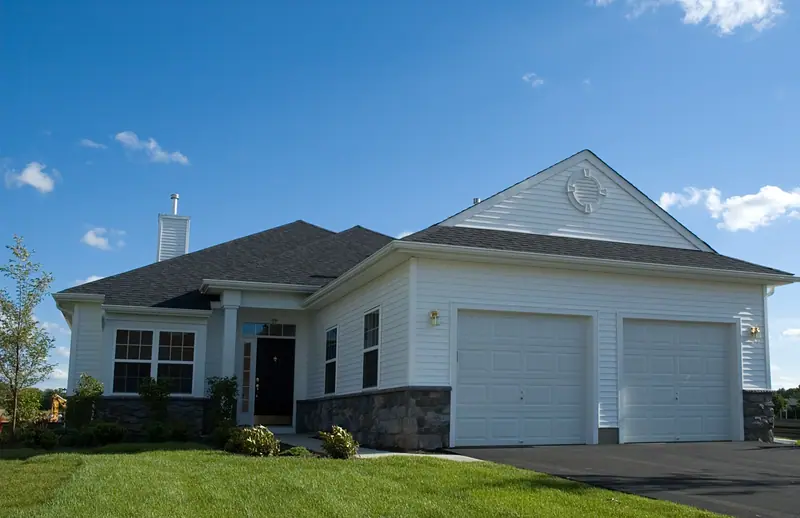
A dented, scuffed panel compared with straight, clean sections
Project notes
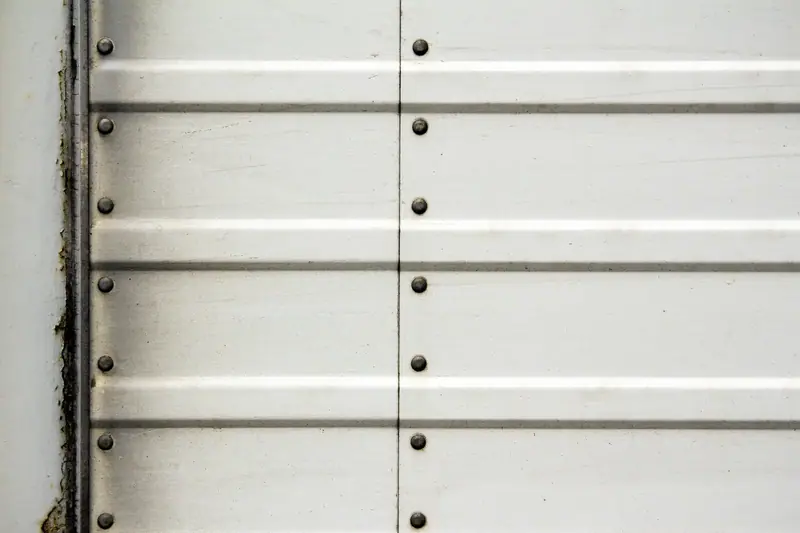
The first image shows panel damage of a familiar kind: a face that has been knocked in, with the paint scuffed and the surface no longer flat. On a steel door a dent like this is usually cosmetic at first. Left alone, it becomes a place where the section flexes, the finish cracks and rust begins.
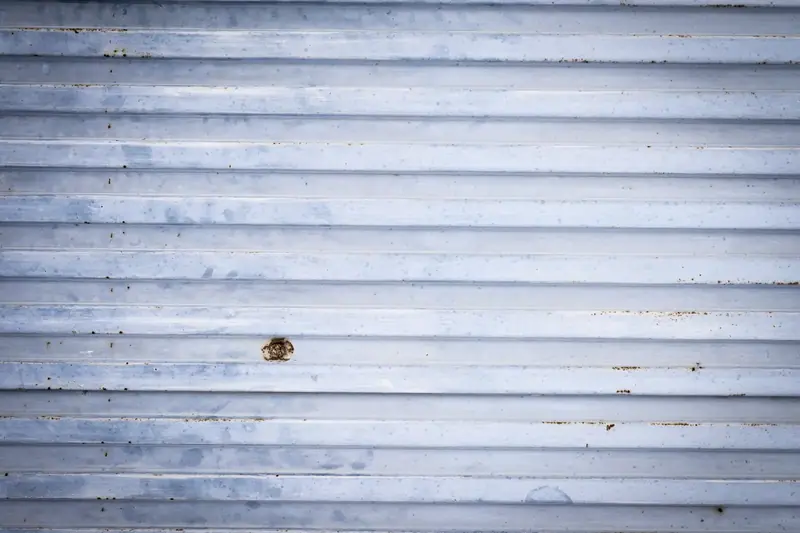
The comparison illustrates sections that are straight and true, with tight, even joints between them. Getting there means either replacing the damaged section with a matching one from the manufacturer, or, where the damage is light, reinforcing the section from behind with a steel strut and tidying the face.
A straight section seals properly against its neighbors, carries its hinges and rollers without stress, and lets the door move as one unit. The door looks cared for again.
Illustrative example. These are licensed reference photographs chosen to show the kind of change this service makes. They are not photos of a specific Nashotah Garage Door customer's property.
How a section replacement is done
- 01
Identify and order
We record the door's details, confirm the section is available and order the match. In the meantime, a damaged door can often be braced or secured for temporary use.
- 02
Secure the door and release tension
The door is supported, and the spring tension is released if the bottom or top section is involved or if the door's weight will change.
- 03
Unstack to the damaged section
Hinges are unfastened and the sections above are lifted away as needed. Replacing a middle or bottom section means dismantling part of the door.
- 04
Transfer hardware
Hinges, rollers, brackets, struts and the bottom seal retainer move to the new section, with worn parts replaced.
- 05
Restack and align
Sections go back in order, joints are closed up evenly and hinges are fastened into the stiles.
- 06
Rebalance
Springs are rewound or adjusted so the door balances with the new section.
- 07
Reset the opener and test
Travel limits and force are checked, and the door is cycled several times.
A single section replacement is normally done in one visit once the part has arrived.
Why you should not ignore a damaged section
A dent might look like a purely cosmetic matter. A creased or cracked section is not.
The sections of a door work together like the boards of a wall. One that has lost its stiffness lets the door rack and twist as it moves. That puts side loads on the rollers and tracks, pulls hinge screws loose, and can let a roller escape the track. On the top section, a crack at the opener bracket will keep growing until the bracket tears out, usually while the door is moving.
There is also the weather. A buckled section does not seal against its neighbors or the stop molding, and a broken skin lets water into the foam core, where it stays.
Panel damage and the Wisconsin climate
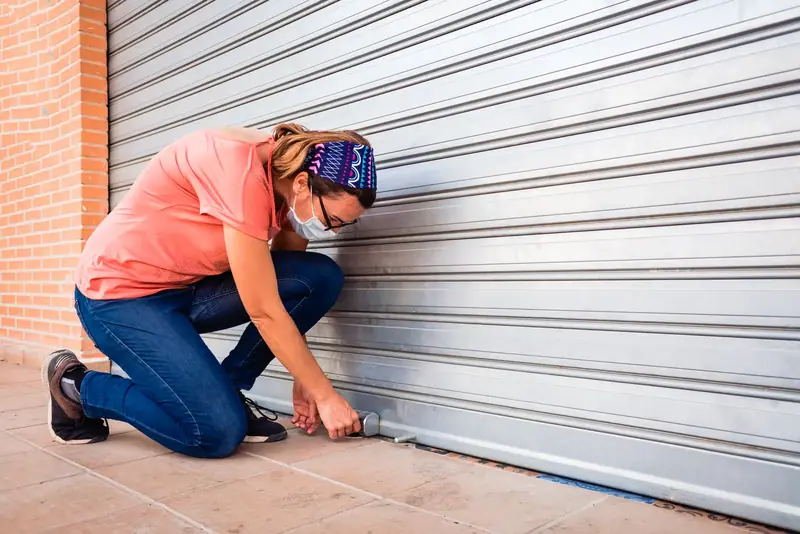
The bottom section and salt. Every winter the lower edge of the door is soaked in salty slush from the driveway outside and from the car inside. Rust usually starts on the bottom rail and at the lower corners. Rinsing the door in spring and touching up chips in the paint are the best defenses.
Frozen-down doors. When the bottom seal freezes to the slab and the opener pulls, the force goes through the top section first. Bent top sections and torn-out opener brackets are a regular winter repair. If the door does not move, stop and free the seal.
Wind. Lake properties and open sites see strong gusts. A wide, lightly built door can flex enough to pop a roller. Struts on the upper sections make a big difference.
Cold and brittle finishes. Vinyl window frames and some older paint finishes become brittle in deep cold, and an impact that would only dent in summer can crack them in January.
Hail and falling branches. Summer storms account for a share of dented panels on wooded lots. See storm & wind damage.
Why this is professional work
Replacing a section means partly dismantling a heavy door that is held up by springs. The bottom section in particular cannot be removed without releasing the cables and springs. Sections are bulky and easy to damage in handling, and a new one that is dropped or twisted is scrap.
There is judgment involved too. Knowing whether a strut will hold or only delay the inevitable, whether a match will be acceptable, and whether your money is better spent on a new door comes from seeing a great many damaged doors. We will give you our honest view.
Frequently asked questions
Often, yes, if the manufacturer still produces that model and color. We need the details from the door's label to check.
The pattern and color will be the manufacturer's match. An older door may have faded slightly, so there can be a small difference in shade, more visible on dark colors.
Shallow ones can sometimes be improved, but steel that has creased has stretched and will not return to flat. For a clean result, replacement of the section is the dependable route.
One section is usually well under the cost of a door. With two or more, or on an old door, the gap narrows and a new door can be the better value.
It should be dealt with soon. A reinforcing strut and a proper opener bracket usually fix it. Left alone, the section will crack.
It depends on the damage. We can often brace the section so the door can be used gently. If it is creased or off its track, it should stay closed.