A garage door bends in three or four places every time it opens. The hinges are where it bends. There are more of them than most people realize, usually a dozen or more on a double door, and each one pivots through ninety degrees and back on every cycle.
We replace garage door hinges for homeowners in and around Nashotah. It is one of the smaller repairs we do, and one that heads off larger ones.
Two jobs, two kinds of hinge
Not all the hinges on a door do the same thing.
Center hinges sit in the middle of the door's width, between the sections. They only hold the sections together and let them fold.
End hinges sit at the outer edges. They hold the sections together and also carry a roller in a sleeve on the hinge. That means they take the side loads from the track as well as the folding load, which is why end hinges fail more often.
Wider and heavier doors may have double end hinges, with two hinges side by side at each edge sharing a long-stem roller.
Why hinges are numbered
If you look closely, each hinge has a number stamped into it. This is not a part code. It tells you where on the door the hinge belongs.
The tracks lean very slightly away from the opening toward the top, so the door can seal tightly when closed and free itself as it rises. To follow that lean, the roller on each successive section has to sit a little further from the door face. The hinge number sets that offset.
| Hinge number | Position on a typical door | Role |
|---|---|---|
| 1 | Between the bottom and second sections, at the ends. Also used for all center hinges. | Roller sleeve closest to the door |
| 2 | Between the second and third sections, at the ends | Sleeve set slightly further out |
| 3 | Between the third and fourth sections, at the ends | Further out again |
| 4 and up | Higher joints on taller doors | Continues the progression |
Put a number 1 hinge where a number 3 belongs and that roller sits too close to the door. The section binds against the stop molding or pulls away from the track. It is a mistake we find fairly often on doors that have had a hinge swapped by guesswork.
Gauge matters
Hinges are stamped from steel of different thicknesses. Many builder-grade doors come with light 18-gauge hinges. They are adequate on a small, light door and marginal on a double insulated one.
When we replace hinges we normally fit 14-gauge, and 11-gauge on heavy or wide doors. The thicker steel resists cracking at the knuckle and holds its pivot shape far longer. The cost difference per hinge is small.
How hinges fail
Cracked knuckle
The rolled barrel around the pin splits from fatigue. The most common failure, especially on end hinges.
Cracked leaf
The flat plate fractures across its screw holes.
Elongated pivot
The pin hole wears oval, so the joint is sloppy and noisy.
Bent hinge
From an impact or from the door being forced while jammed.
Seized pin
Rust locks the pivot. The hinge then bends the section steel instead of turning.
Loose or stripped screws
Fasteners back out of the thin steel skin and the hinge moves around.
Worn roller sleeve
The tube that holds the roller stem wears large, letting the roller tilt.
Signs you can spot yourself
With the door closed, look along each joint from inside.
- A visible crack in any hinge.
- Rust streaks running down from a hinge.
- Screw heads standing proud, or empty screw holes.
- A gap opening at one section joint when the door moves.
- Squeaking, creaking or a sharp pop as each section rounds the curve.
- A roller that sits crooked in the track.
- One section that seems to shift sideways relative to the others.
A single cracked hinge is not an emergency, though it should be replaced soon. The remaining hinges on that joint are carrying extra load, and they will follow.
How we replace hinges
- 01
Inspect every hinge
We check all of them, not just the obvious one, along with the rollers and the steel they are fastened to.
- 02
Secure the door
The opener is disconnected and the door is closed and clamped. Hinges are replaced with the door down, so each section is supported by the one below.
- 03
Replace one hinge at a time
Removing several at once lets the sections shift. Each hinge is taken off, the roller is transferred or renewed, and the new hinge of the correct number is fastened.
- 04
Deal with stripped holes
Where screws no longer bite, we use the proper larger fastener or reposition into sound steel. On thin doors we may add a backing plate.
- 05
Check the stiles
If the steel behind the hinge has cracked or pulled, the section needs reinforcement and we will discuss it.
- 06
Lubricate the pivots
Each hinge pin gets a small amount of garage door lubricant.
- 07
Test the travel
The door is run by hand and with the opener while we watch the joints close and the rollers track.
Most hinge jobs take well under an hour.
Before & after
A rusted, seized hinge compared with new plated hardware
Project notes
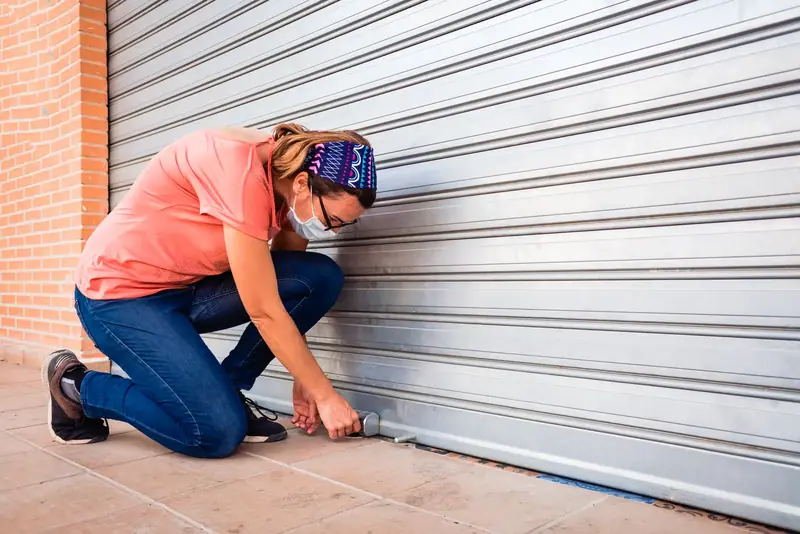
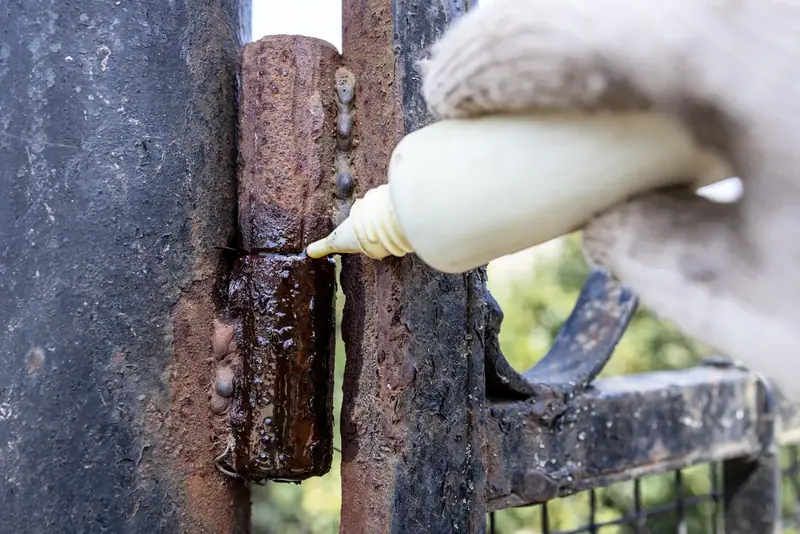
The first image shows a hinge in the state that damp and neglect produce: rust has built up around the pin, the joint has stiffened, and someone is trying to coax it back with lubricant. Oil can free a hinge that is only dry. It cannot repair one that has rusted thin or worn its pivot oval.
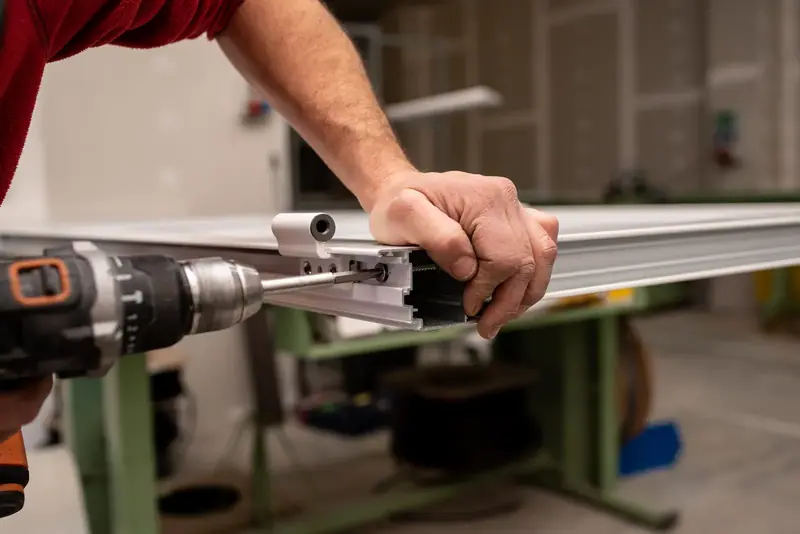
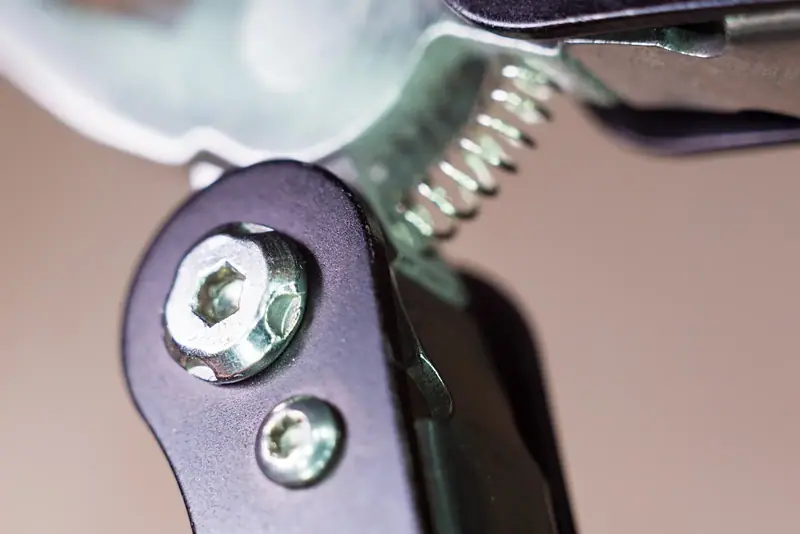
The second image illustrates new plated hardware with fresh fasteners and a clean, tight pivot. On a garage door the replacement is a hinge of the correct number for its position, in a heavier gauge where the door warrants it, fastened into the section's reinforced stile.
New hinges let the sections fold smoothly at the curve, keep the rollers square in the track, and remove a good deal of the squeaking and popping that people assume is just what garage doors sound like.
Illustrative example. These are licensed reference photographs chosen to show the kind of change this service makes. They are not photos of a specific Nashotah Garage Door customer's property.
When loose screws are the real problem
Often the hinge itself is fine and the fasteners are not. The self-tapping screws that hold hinges to a steel door bite into fairly thin metal. Years of flexing work them loose, and once the hole is enlarged, tightening does nothing.
The fix depends on the door. Sometimes a slightly larger screw restores the grip. On doors with reinforced stiles there may be fresh metal available beside the old hole. Where the skin has torn, a reinforcing plate behind the hinge spreads the load. If the door has a habit of loosening its hinges, it is usually flexing too much, and a strut across the section addresses the cause. See panel repair & replacement.
Hinges and the Nashotah climate
Rust. Hinges on the lower joints get splashed with salty meltwater from the car all winter. Plated hinges resist it for years, but once the plating is breached, rust moves into the pivot. A light lubricant on the pins in fall keeps moisture out.
Cold and stiffness. A dry hinge that merely squeaks in summer can bind in deep cold. When that happens the section tries to flex at the hinge leaf instead of turning on the pin, and that is how leaves crack.
Thermal cycling. Steel doors expand and contract through a wide range here. That movement is part of why fasteners loosen over time, and why an annual tighten-up is worthwhile.
Frozen-down doors. An opener pulling on a door frozen to the slab loads every hinge from the top down. Bent upper hinges are a common result.
Can you do this yourself?
Center hinges on the middle joints are among the few door repairs a careful homeowner can reasonably attempt, one at a time, with the door closed and the opener unplugged. If that is all you need, we are happy for you to try.
We would ask you to leave three things to us. The bottom brackets, which are under cable tension and are not hinges. The top brackets, which affect how the door seals and can let the top section fall inward if removed carelessly. And any end hinge on a door that is binding, bowed or off its track, where the hinge is under load and can spring when released.
It is also worth knowing that a cracked hinge is often a symptom. A professional visit includes finding out why it cracked, whether that is a worn roller, a misaligned track or an unbalanced door.
Frequently asked questions
Look for the number stamped on the old hinge and note whether it is a center or end hinge. Replace like with like. If the number is unreadable, the position on the door determines it.
For a short time, gently, if it is a single hinge and the door is otherwise moving normally. Arrange a replacement soon, because the load shifts to the neighboring hinges.
The holes in the steel have likely enlarged, or the section is flexing. Larger fasteners, a backing plate or a reinforcing strut will cure it.
Yes. Fourteen-gauge hinges cost little more than light ones and last much longer, especially on double and insulated doors.
A drop of garage door lubricant on each pivot twice a year is enough. Wipe away the excess so it does not collect dust.
They often remove squeaks and popping. For rumbling and grinding, the rollers are the more likely cause. See roller replacement.