Some garage doors can be heard from the street. Others wake the baby in the room above every time someone leaves for an early shift. A few rattle the dishes. Homeowners often assume this is simply how garage doors are.
It is not. A well-maintained door on a decent opener is quiet enough that you may not notice it from the next room. We reduce garage door noise for homes around Nashotah, and it is detective work as much as repair.
Reading the sounds
Different noises point to different parts. This table is the one we carry in our heads.
| Sound | Most likely source |
|---|---|
| Grinding or rumbling the whole way | Worn rollers with failed bearings |
| Squeaking or squealing | Dry hinges, dry roller stems or dry bearing plates |
| Rattling and buzzing | Loose hinge screws, track bolts or opener mounting hardware |
| Popping or pinging as the door moves | Torsion spring coils binding, or a section joint flexing |
| A loud bang, once | A spring has broken. Stop using the door. |
| Scraping | Door rubbing on the track or stop molding, or a cable chafing |
| Clunking at the curve | Flat-spotted rollers or a step in the track joint |
| Slapping or clattering overhead | A loose opener chain hitting the rail |
| Loud hum or growl from the motor | An aging AC opener, or worn gears |
| Vibration felt in the house | Opener bolted rigidly to joists under a room |
| Thud at the floor | Door closing too hard, or out of balance |
Most noisy doors have three or four of these going on together, which is why a single squirt of oil rarely solves it.
Where the noise comes from
It helps to divide a garage door's sound into two kinds.
Airborne noise is what you hear standing in the garage or the driveway: the grind of rollers, the rattle of the chain, the squeak of a hinge. It is produced directly by the moving parts.
Structure-borne noise is vibration that travels from the door and opener into the framing of the house. The steel angle that hangs the opener and the tracks is bolted straight to the ceiling joists. Those joists are the floor of the room above. The building becomes a sounding board. This is the noise that wakes people upstairs, and it can be loud in the bedroom even when the garage itself does not seem especially noisy.
Treating the first kind means fixing the parts. Treating the second means breaking the path into the structure.
What we do to quiet a door
- 01
Listen and locate
We run the door several times, by hand and with the opener, and note where each sound occurs in the travel. Running it by hand with the opener disconnected separates door noise from opener noise.
- 02
Tighten everything
Hinge screws, track bolts, bracket lags, strut fasteners and opener mounts are all snugged. Loose hardware is behind much of the rattle.
- 03
Replace the rollers
Steel or worn plastic rollers are swapped for nylon rollers with sealed ball bearings. This is usually the single biggest improvement.
- 04
Lubricate correctly
Hinge pivots, spring coils, bearing plates and any unsealed roller bearings get a garage door lubricant. The tracks are cleaned and left dry.
- 05
Check alignment and balance
Track spacing is corrected so the door does not rub, and the springs are adjusted so the door is balanced and the opener is not straining.
- 06
Service the opener
Chain or belt tension is set, the rail and trolley are lubricated where the manufacturer specifies, and the mounting is inspected.
- 07
Isolate vibration
Where structure-borne noise is the issue, rubber or neoprene isolators are fitted between the opener hangers and the joists.
- 08
Advise on the opener
If the opener itself is the loudest thing left, we explain the options for a quieter replacement.
Often the first five steps are enough.
Before & after
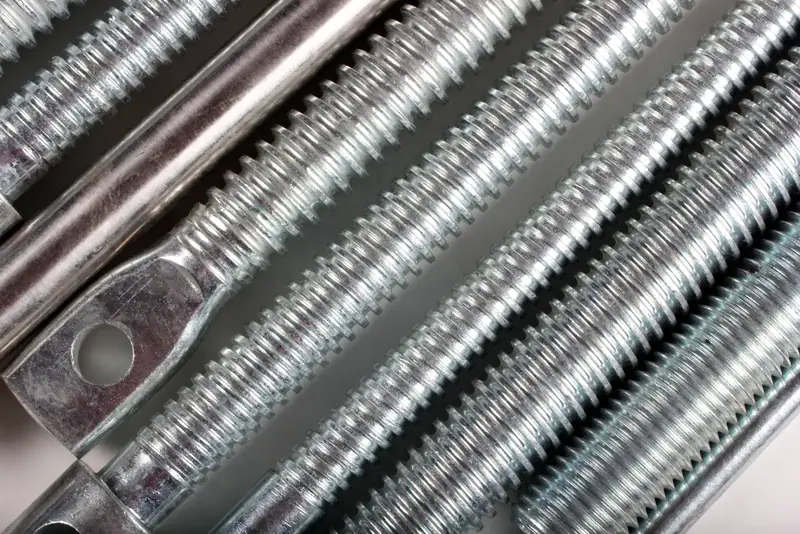
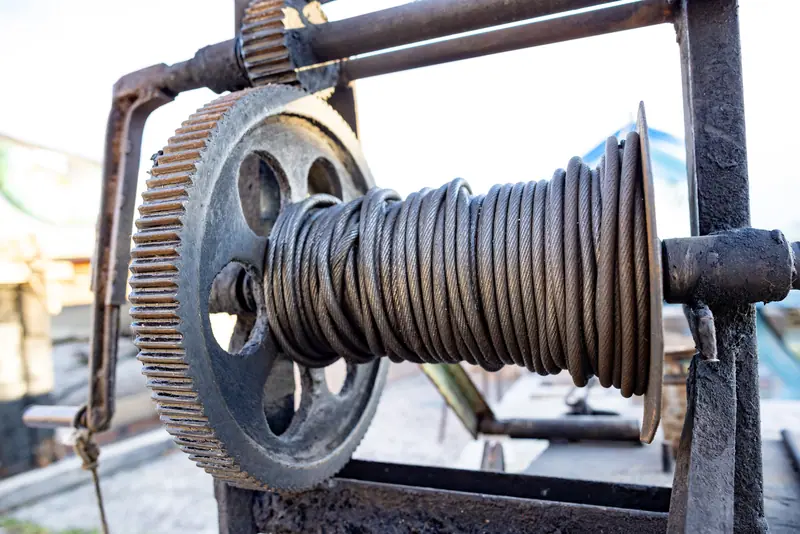
Dry, rusted moving parts compared with clean, well-kept hardware
Project notes
The first image makes the source of most door noise easy to understand: bare, rusty metal working against more bare, rusty metal. On a garage door the same thing happens on a smaller scale in dry roller bearings, unlubricated hinge pins, rough spring coils and worn bearing plates. Every one of them adds its own note.
The second image illustrates the alternative, clean and bright hardware with smooth surfaces. On a door, getting there means replacing worn steel rollers with sealed nylon ones, tightening every fastener, lubricating the pivots and springs with the correct product and replacing any bearing that has gone rough.
The result is a door that hums instead of grinds. Less noise also means less wear, because the sound was energy being spent on destroying parts.
Illustrative example. These are licensed reference photographs chosen to show the kind of change this service makes. They are not photos of a specific Nashotah Garage Door customer's property.
The parts that make the biggest difference
Rollers
If we could change only one thing on a noisy door, it would be the rollers. Steel wheels on steel track are loud by nature, and once the bearings wear they grind. Nylon tires with sealed bearings roll almost silently. Details are on the roller replacement page.
Hinges
Worn hinges let the sections clatter against one another, and dry pins squeak. Cracked or sloppy hinges are replaced, the rest lubricated. See hinge replacement.
The door itself
A single-skin steel door is a large, thin sheet of metal, and it amplifies every vibration. An insulated door with a foam core is far deader acoustically. If you are replacing a door for other reasons, this is a real benefit. See insulated garage doors.
The opener drive
Chain drive
A metal chain on a steel rail. Strong, economical and the loudest type. Fine for a detached garage.
Belt drive
A reinforced rubber belt in place of the chain. Much quieter. The usual choice under living space.
Screw drive
A threaded rod turns to move the trolley. Fewer parts. Noise is moderate, and it varies with temperature and lubrication.
Wall-mount jackshaft
Mounted beside the door on the torsion shaft, with no rail on the ceiling. Very quiet, and it sends little vibration into the joists above.
Modern openers with DC motors also start and stop gently, which removes the jolt and bang at each end of travel. If your opener is an older chain-drive AC unit under a bedroom, replacing it is often the last step in getting real quiet. See opener replacement.
What you can safely do yourself
A few things are worth trying before you call.
- Tighten the hinge screws and track bolts with a socket wrench. Snug, not forced, as the steel is thin.
- Put a small amount of garage door lubricant on each hinge pivot and on the stems and bearings of steel rollers.
- Spray a light coat along the torsion spring coils.
- Wipe the tracks clean. Do not grease them.
- Check that the opener's chain is not sagging well below the rail.
Leave the springs, cables, bottom brackets and anything under tension alone. And if the door has started making a new noise suddenly, particularly a pop or a bang from above, have it looked at before using it further.
Why doors get louder in a Wisconsin winter
Noise complaints rise with the first hard frost, and there are clear reasons.
Lubricant thickens. Ordinary grease stiffens in the cold, and parts that moved freely in summer begin to drag and squeal. A product rated for low temperatures stays fluid.
Steel contracts. As the door and track shrink, clearances change. Something that just cleared in August now rubs.
Plastic hardens. Old plastic rollers become brittle and noisy, and may crack.
Springs stiffen. The door gets a little heavier in effect, the opener works harder, and everything is louder.
Houses are closed up. With windows shut and the furnace cycling, a rumbling door is simply more noticeable.
Servicing the door in the fall, with cold-rated lubricant, deals with most of this before it starts.
Noise as an early warning
One more reason to take noise seriously. Sound is a symptom. A grinding roller is wearing out the track. A popping spring is binding. A rattling bracket is working loose. A door that suddenly sounds different is telling you a part has changed, and that is usually the cheapest moment to fix it. A proper noise visit doubles as a safety inspection for that reason.
Why bring in a professional
You can make a real dent in door noise with a wrench and a can of lubricant. Getting a door properly quiet takes more: identifying which of a dozen possible sources matters, replacing rollers including those on the tensioned bottom brackets, adjusting spring balance, correcting track alignment and isolating the opener. Those jobs need the right parts and, in the case of springs and bottom brackets, the right safety procedure.
Frequently asked questions
The usual causes are worn steel or plastic rollers, loose hardware, dry hinges and springs, and an older chain-drive opener. Most doors have several of these at once.
It helps with squeaks and binding. It will not cure worn rollers or loose hardware, which are responsible for most grinding and rattling.
Belt-drive openers with DC motors, and wall-mounted jackshaft openers, are the quietest. Both are good choices under a bedroom.
In most cases, yes. Vibration isolators on the opener mounts, a belt or wall-mount opener, nylon rollers and a balanced door together reduce it dramatically.
A silicone or lithium spray made for garage doors. Avoid heavy grease, and avoid general-purpose penetrating sprays as a long-term lubricant.
Not necessarily, but noise means wear. A sudden new sound, especially a bang or repeated popping from the springs, should be checked promptly.